

After 9 years of building and growing Shopify stores, the question I hear most is still the same: how do I get more sales?
There's no single trick. For our clients it's a mix of 7 things, and the right order depends on the store. Below is each one, what we actually do and the real numbers from our clients' dashboards. Store names stay private, the results don't.
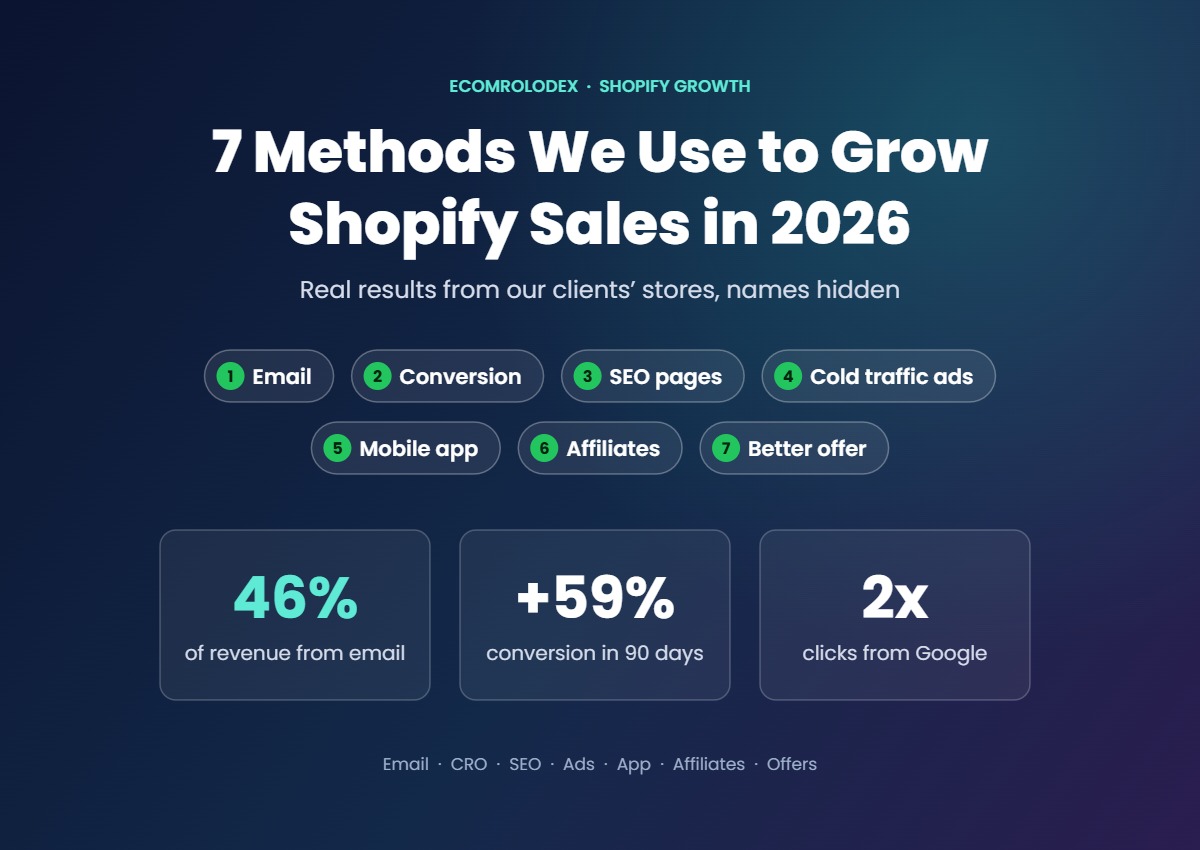
The 7 methods at a glance
- Email marketing: 46% of a US brand's revenue this year came from email and SMS
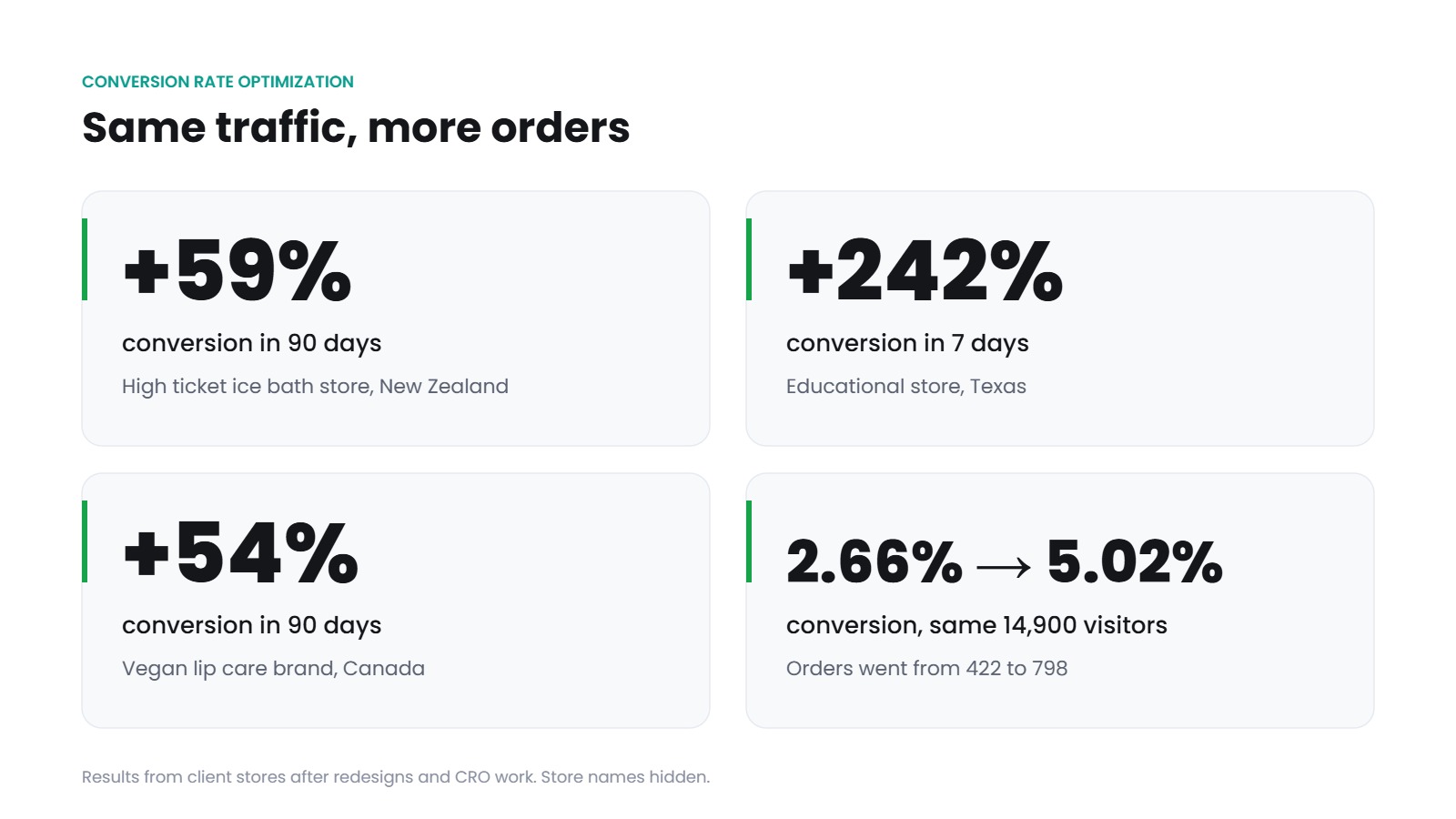
- Conversion optimization: +59% conversion in 90 days with the same traffic
- SEO with more pages: clicks from Google went from 3,500 to about 8,000 a month
- Cold traffic ads: 134 purchases in 30 days, 2.3x ROAS, best ad 5.1x
- An iOS and Android app: free push notifications to your best customers
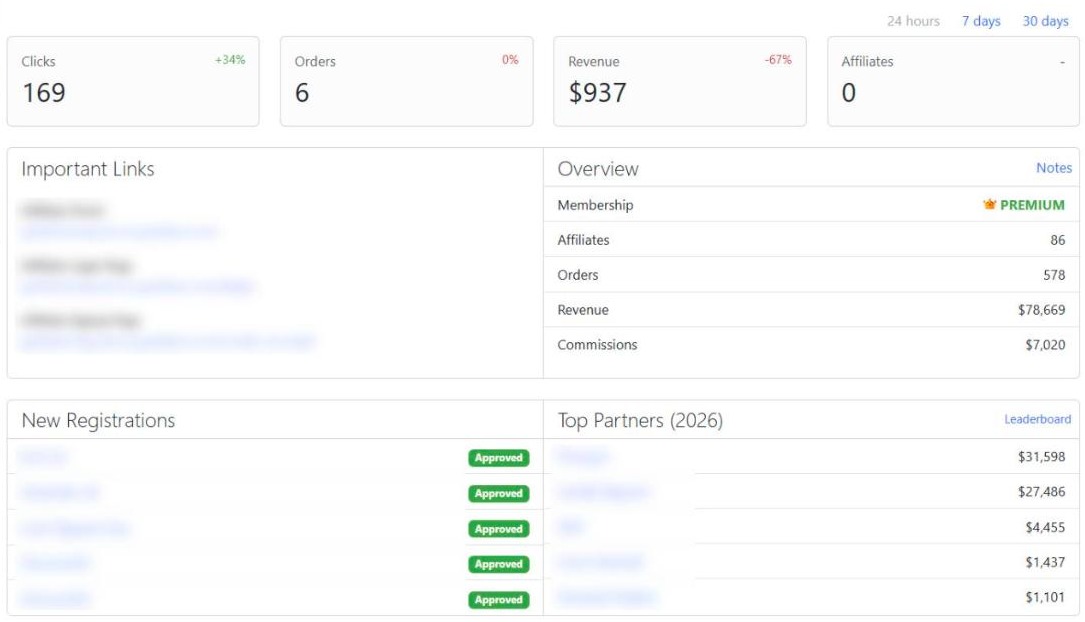
- An affiliate program: 86 affiliates, 578 orders and $78,000+ in sales
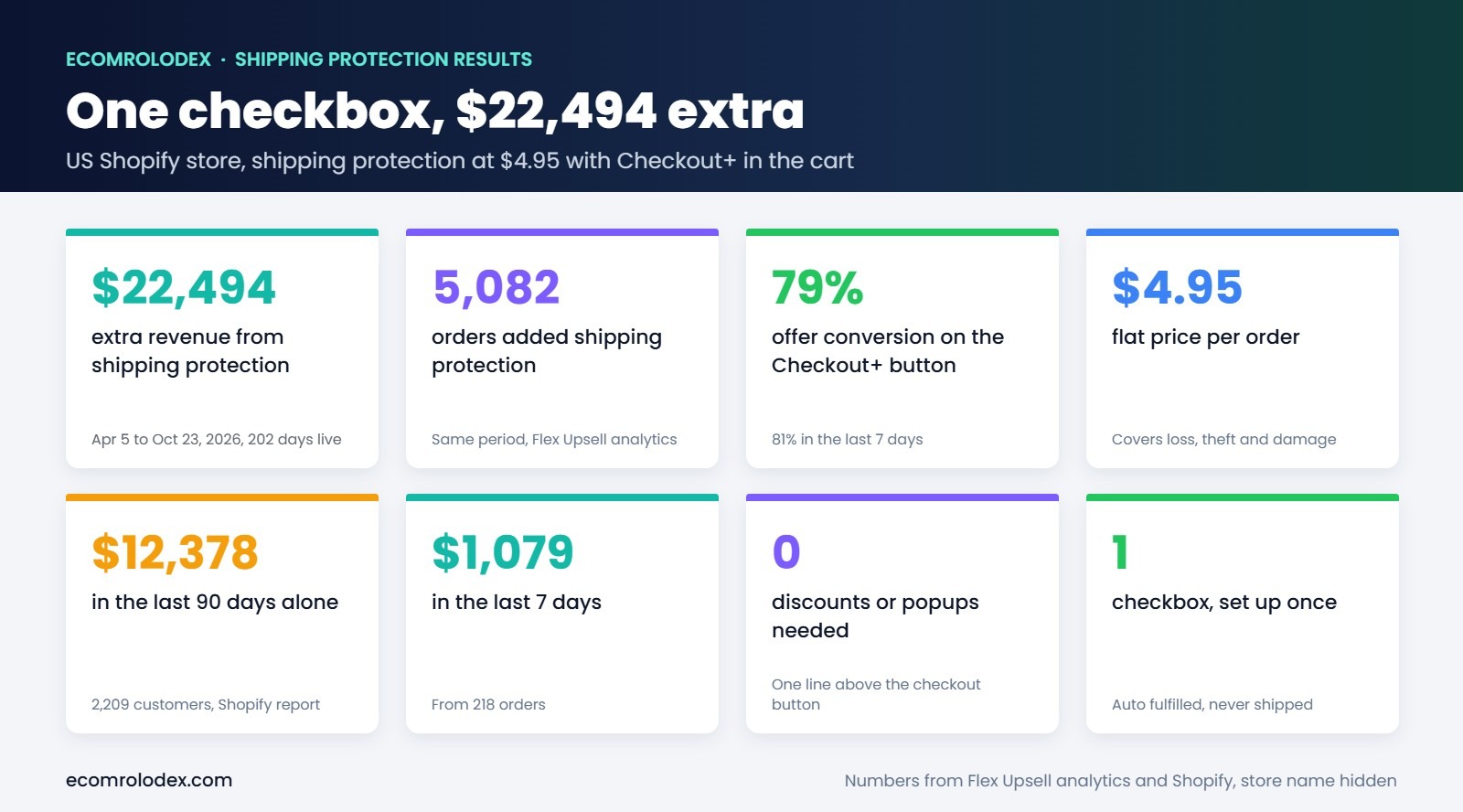
- A better offer: $22,494 from one $4.95 checkbox in the cart
METHOD 1 OF 7
Email marketing: automations and campaigns
Email is still the cheapest sale you'll ever make. You already paid to get these people to your store, email brings them back for free. We split it in two parts: automations that run on their own, and campaigns we send every week.
Automations that sell while you sleep
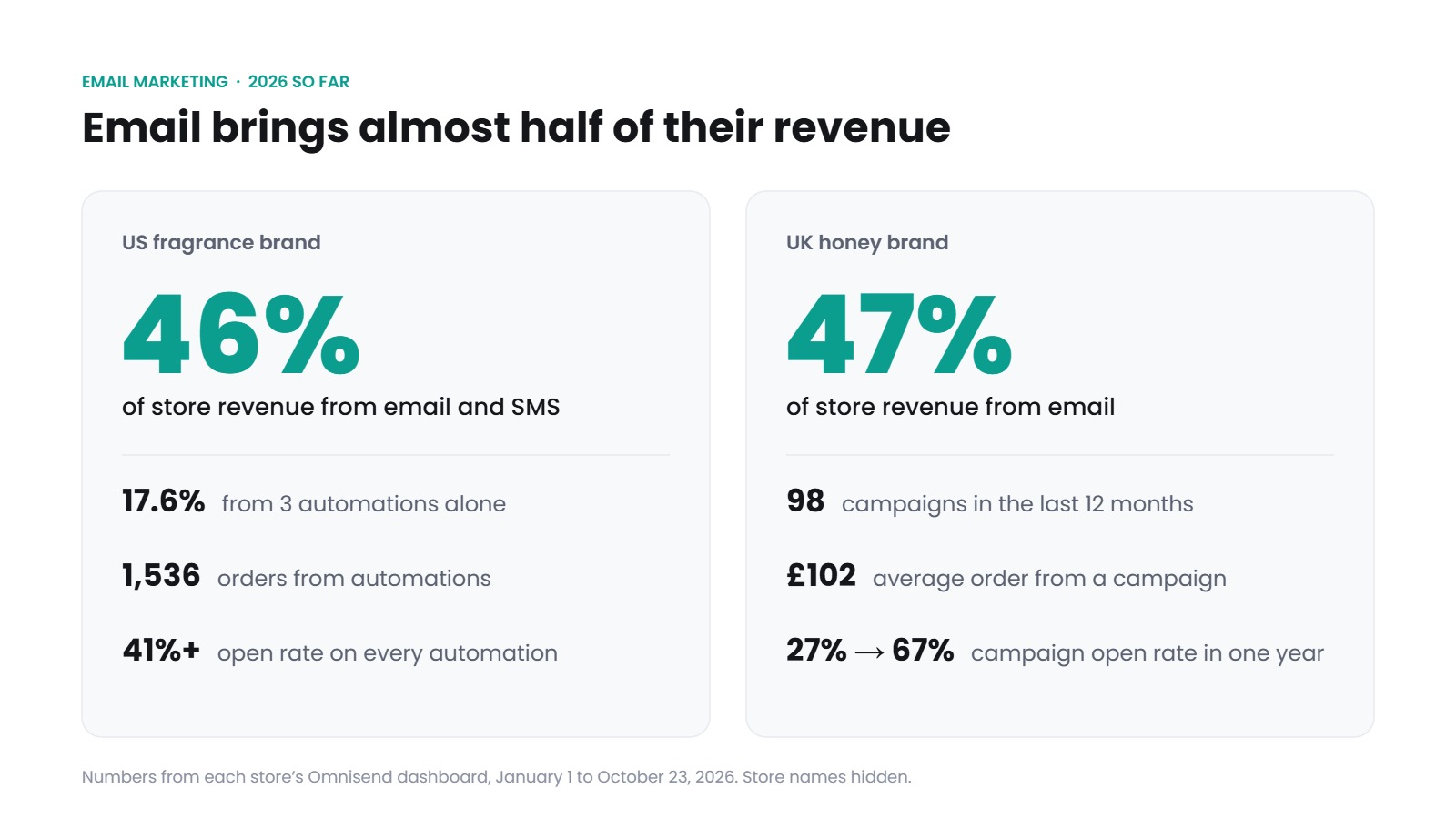
For a US fragrance brand we run 3 automations: a welcome series, an abandoned cart flow (1 hour after someone adds to cart) and an abandoned checkout flow (1 hour after someone starts checkout). That's it. No 20-flow setup.
- 46% of the store's revenue this year came from email and SMS
- 17.6% came from those 3 automations alone, 1,536 orders without anyone pressing send
- Every automation has an open rate above 41%
Campaigns people actually open
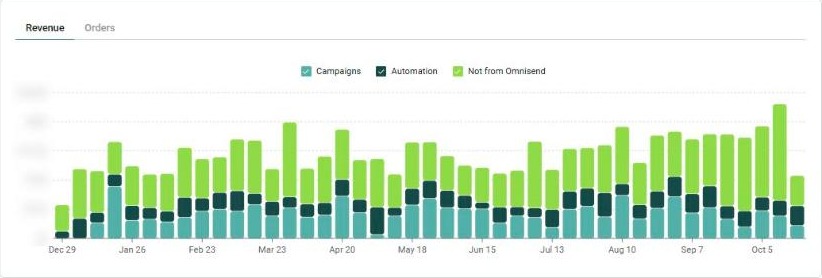
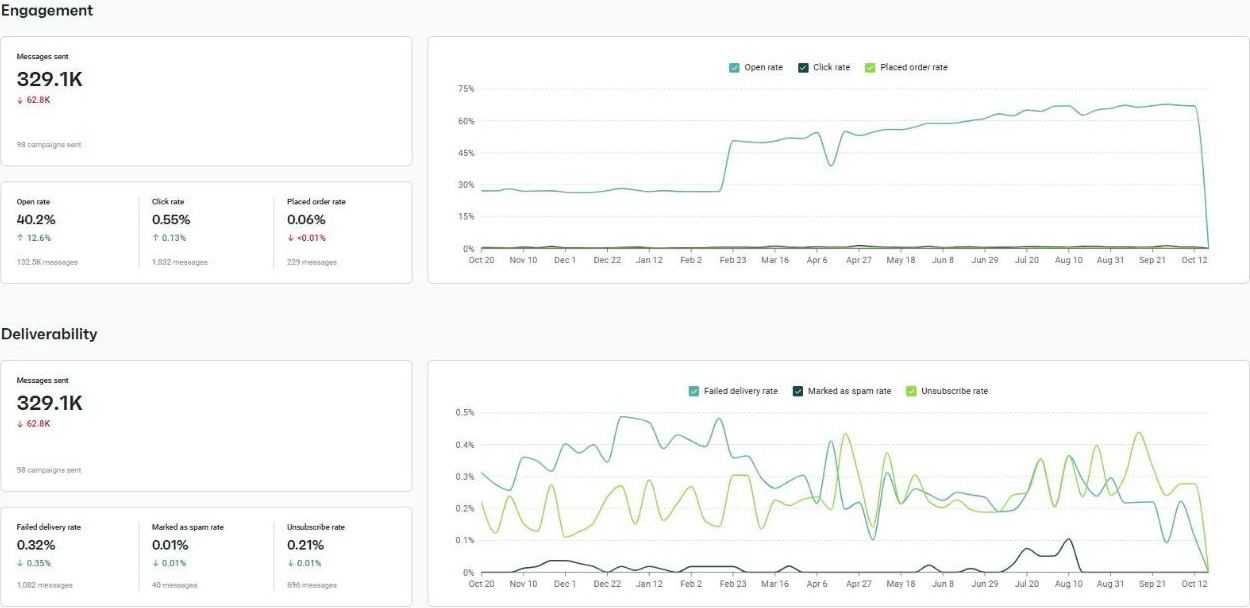
For a UK honey brand the campaigns do the heavy lifting. We send about 2 a week, built around what's new and what's in season.
- 47% of the store's revenue this year came from email
- 98 campaigns in the last 12 months, with an average order of £102
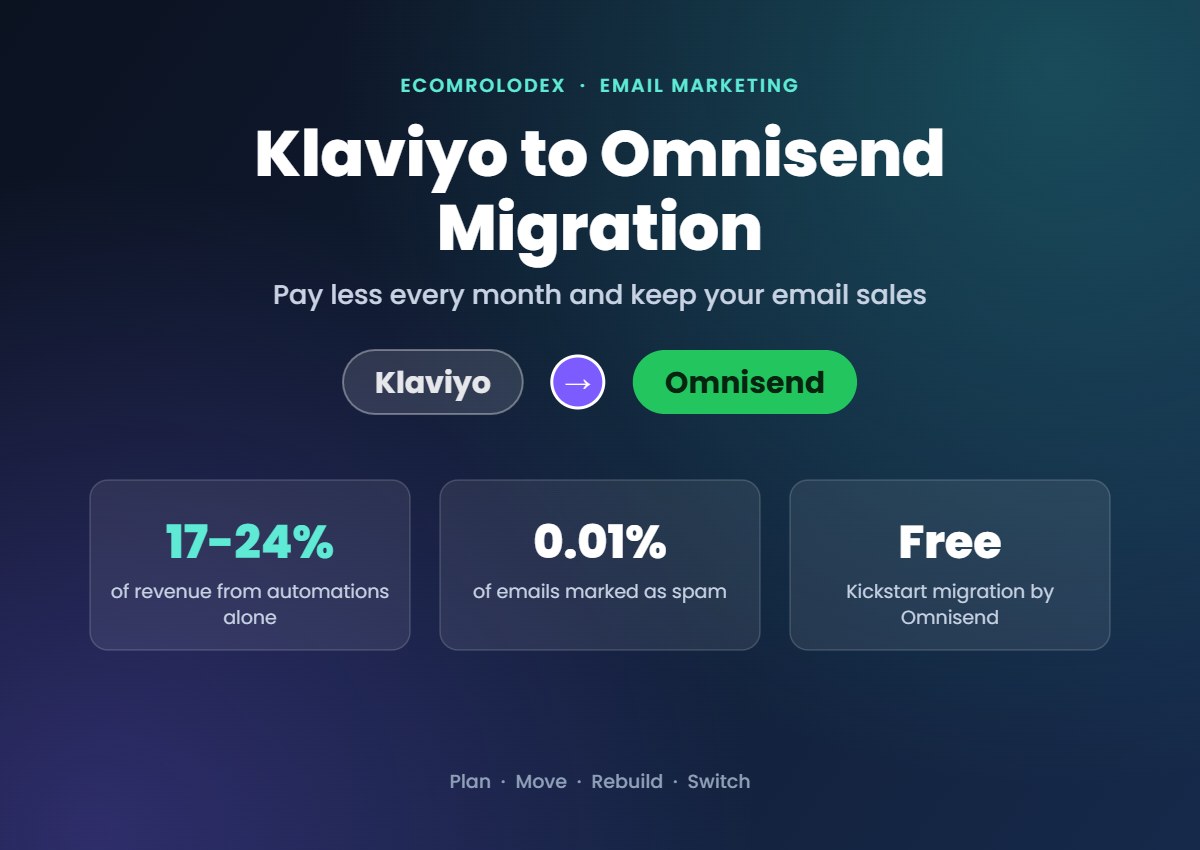
- Campaign open rate went from 27% to 67% over the year, with a 0.01% spam rate
Most of our email clients are on Omnisend. It does everything Klaviyo does for most stores and costs a lot less as the list grows. Here's how we move stores from Klaviyo to Omnisend.
METHOD 2 OF 7
Conversion rate optimization (CRO)
If your store converts at 1%, doubling it to 2% is the same as doubling your traffic, without paying for a single extra click. That's why this is where we start with most new clients.
What we actually change:
- The first screen on mobile. What the product is, why it's better and the price, before anyone scrolls.
- Product pages. Benefits instead of features, reviews with photos, bundles and a clear choice between options.
- The cart. A free shipping bar, one-click add-ons and trust right next to the checkout button.
- Speed. Old apps and scripts out, images compressed.
Every change gets designed in Figma first, so the client sees it before we build it. You can see the full story of the ice bath store that grew conversion 59% in 90 days.
METHOD 3 OF 7
SEO by creating more pages
Google can only send you traffic for pages that exist. Most stores have a homepage, a few collections and their products, and that's it. We build pages for what people actually search for.
For a US fragrance brand that meant:
- Adding pages for the scents and searches people actually type into Google, each with its own title and description
- Redirecting every old link when they moved to Shopify, so no ranking was lost
Clicks from Google went from about 3,500 a month in November 2025 to almost 8,000 a month in 2026. In September the store showed up 256,000 times in Google, and 525 pages got their first impressions in that month alone.
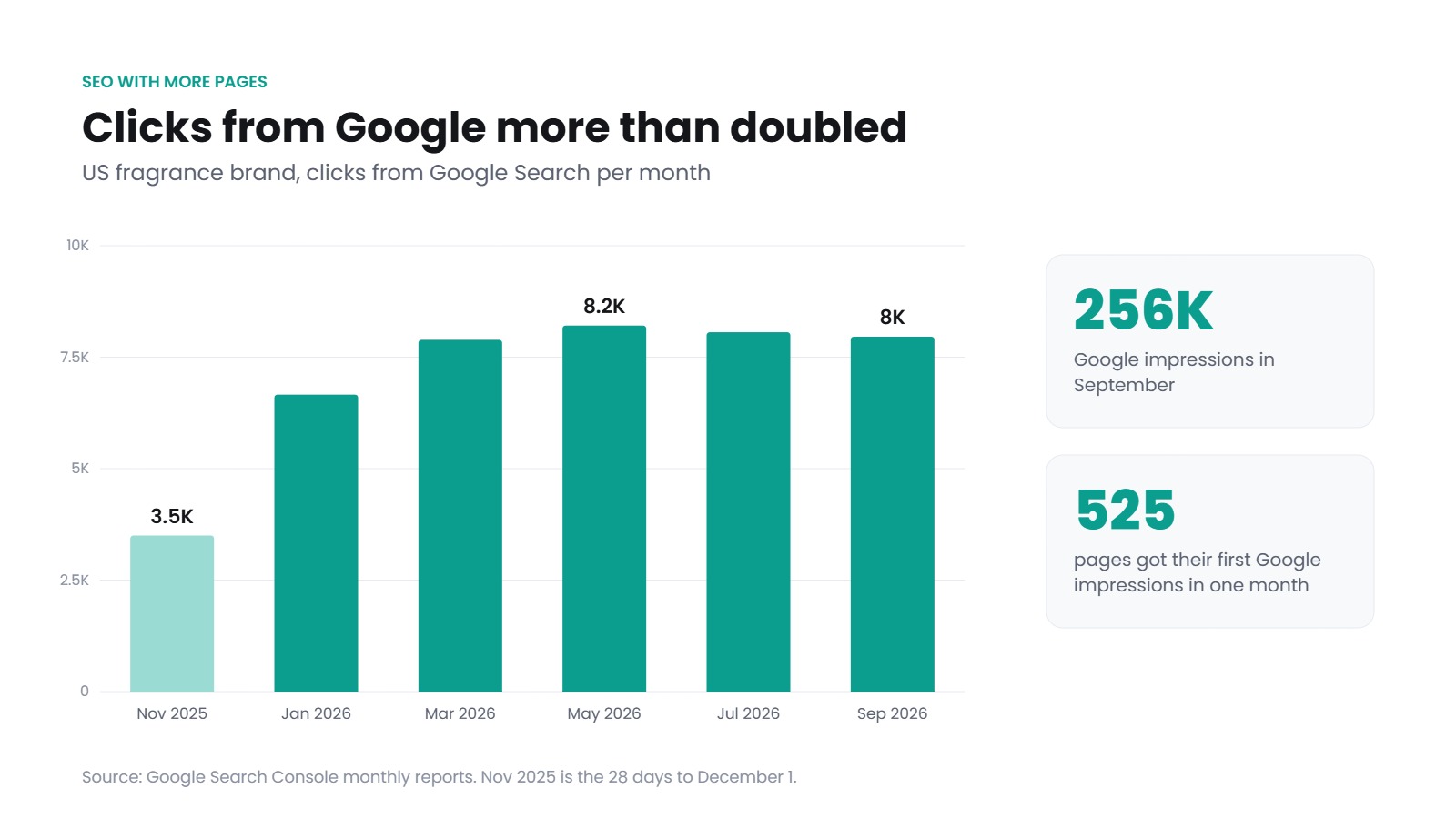
SEO is slow at the start and then it compounds. Every page you add keeps bringing visitors for free, month after month.
METHOD 4 OF 7
Facebook and Instagram ads for cold traffic
A lot of agencies show great ROAS numbers that come from remarketing: ads to people who were already about to buy. These aren't that. This is cold traffic only, people who had never seen the brand before.
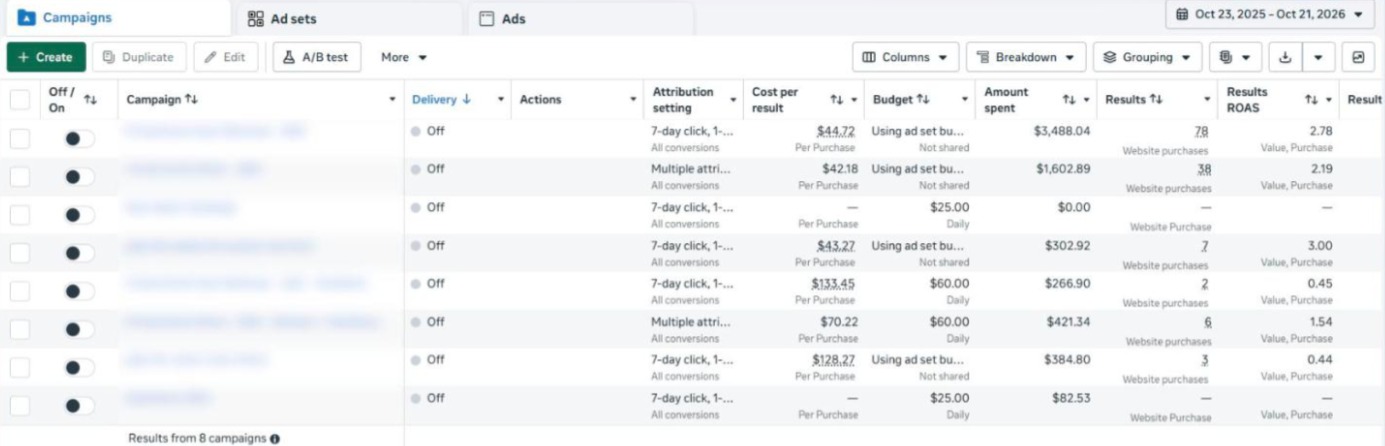
In a recent 30-day test for a US brand:
- 134 purchases from cold traffic
- 2.3x return on ad spend across every campaign, including the tests that didn't work
- The best campaign returned 3x, the best single ads 4.3x and 5.1x
How we run it: a short quiz that sends people to the right product, a lot of video hooks tested against each other, losers turned off fast and winners rebuilt into new versions. The store has to convert first, that's why ads usually come after CRO.
METHOD 5 OF 7
Publish your store as an iOS and Android app
We've published a client's Shopify store as an app on the App Store and Google Play. It isn't for every store, but for brands where people buy again and again it's one of the best channels you can own.
- Push notifications are free. No cost per email or SMS, and they land on the lock screen.
- Your logo on their home screen, next to the apps they open every day.
- Faster reorders. Customers stay logged in, so buying again takes a few taps.
- App-only offers that give your best customers a reason to download it.
It works best for supplements, beauty, food and anything else people reorder. The app uses your Shopify products, so there's nothing extra to manage.
METHOD 6 OF 7
Start an affiliate program
Affiliates are people who sell for you and only get paid when they do. For a US fragrance brand we set up an affiliate program with GoAffPro: a signup page, a commission for every sale and a coupon code for each affiliate.
- 86 affiliates signed up
- 578 orders and $78,669 in sales came through them
- Commissions paid: $7,020, about 9% of the sales they brought
- The top affiliate alone brought in $31,598 this year
The best affiliates are usually your happiest customers. Ask them first, before you go looking for influencers.
METHOD 7 OF 7
Improve the offer
Sometimes the product page is fine and the traffic is fine, and the offer is what's missing. A few small changes in the cart can add up to a lot:
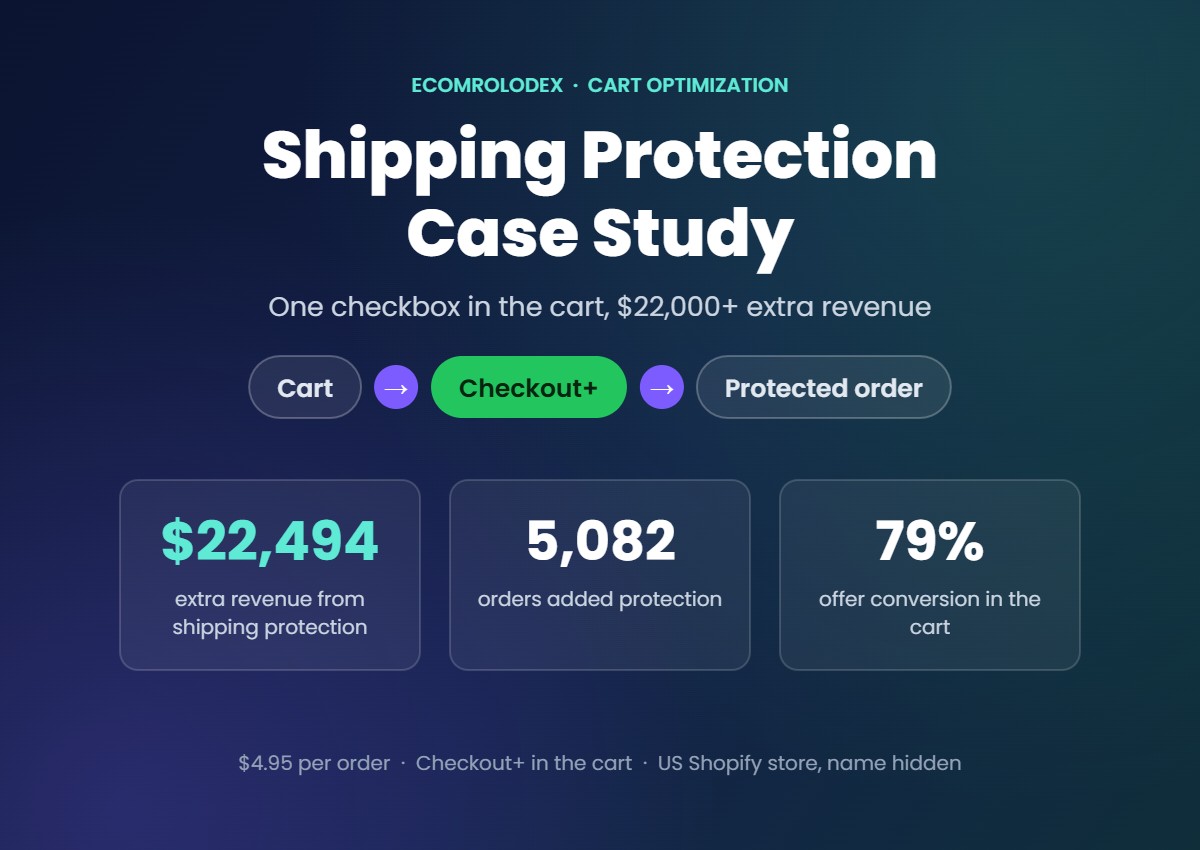
- Shipping protection: $22,494 extra from one $4.95 checkbox on the checkout button
- Free shipping over a set amount and buy more, save more: claimed 9,491 times in 6 months in one store's cart
- Bundles and a free gift at a spend amount: a cookie brand had 43,000+ cart offers claimed
The rule we follow: the offer has to be clear in one line and easy to say no to. That's what keeps it from feeling pushy.
Which one should you start with?
- Converting under 1.5%? Start with CRO. Everything else gets cheaper after it.
- Have customers but no email flows? Set up the 3 automations this week.
- Lots of products people search for by name? Build the pages for SEO.
- Store converts well and you want new customers? Cold traffic ads.
- People reorder every month? An app and weekly campaigns.
- Customers already post about you? Turn them into affiliates.
- Lots of small orders? Fix the offer: shipping protection, bundles, free shipping threshold.
We keep every project in one Google Sheet, with each task numbered and its status, and talk with clients on WhatsApp, so it's always clear what's being done this week and why.
Questions store owners ask
How long until I see results?
Email automations and offer changes usually show up in the first 2 weeks. CRO in 30 to 90 days. SEO takes 3 to 6 months and keeps growing after that.
Do I need all 7?
No. Most stores get the biggest jump from 2 or 3 of them. We look at your store and your numbers and pick where to start.
Why don't you show the store names?
Because these are real businesses with real numbers. We share the results, not who they are.
Klaviyo or Omnisend?
For most stores we use Omnisend. Same results, lower cost as your list grows.
Which one would grow your store first?
Send me your store link. I'll look at it and tell you the 3 things I'd do first.
Numbers from our clients' Omnisend, Google Search Console, Meta Ads Manager, GoAffPro and Shopify dashboards, November 2025 to October 23, 2026. Store names hidden.